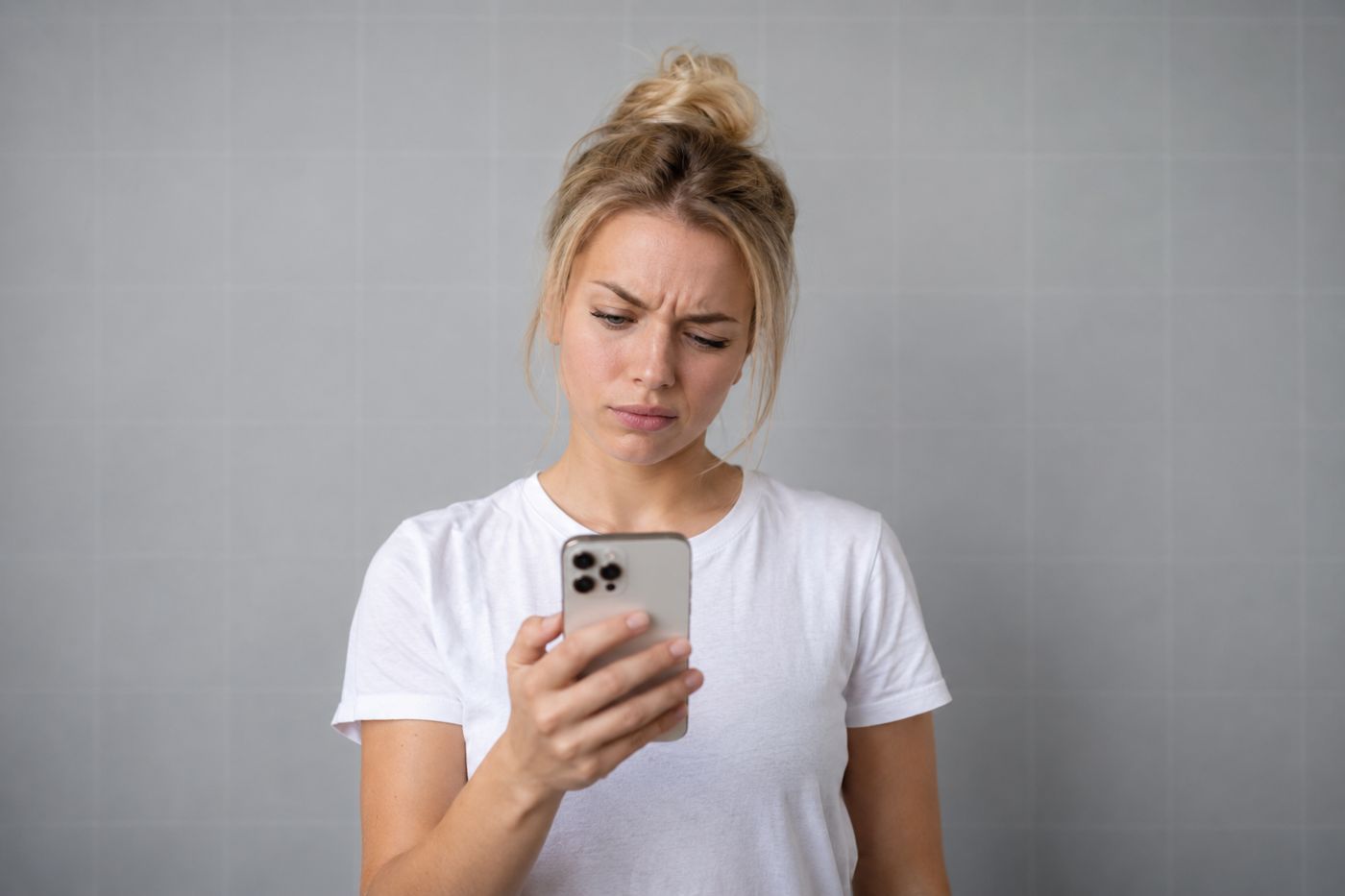
No reply to your message: how to handle the wait without panicking

In short: an unanswered message almost never means what anxiety imagines. People reply late because they're busy, tired, or waiting until they have time to answer properly. To get through the wait: name what you feel, set yourself a reasonable time frame, shift your attention elsewhere, and if you follow up, do it once, simply.
"Seen at 9:48 PM". Then nothing. You reopen the chat every ten minutes, reread your own message to check it wasn't awkward, imagine what the other person is doing. Waiting for a reply is one of the most frequent anxiety triggers, and one of the most exhausting.
Why silence hits so hard
Silence is an empty message, and an empty message is the perfect screen for projection. With no information, anxiety fills the void with hypotheses, and it rarely picks the most reassuring ones: "they're ignoring me", "she's upset", "I said something wrong".
Messaging apps don't help: read receipts, "online" status, "typing…" appearing and disappearing. Every signal becomes a clue to decode, even though it says almost nothing about the other person's intentions.
The real (often boring) reasons a reply is late
- They read the message while walking, at work or driving, and plan to reply later.
- Your message deserves a real answer, and they're waiting until they have time to write it properly.
- A busy day, fatigue, a dead battery, notifications turned off.
- Some people naturally reply slowly, to everyone. It isn't a signal about you.
None of these reasons is dramatic, and that's exactly why your brain doesn't suggest them first.
What to do while you wait
- Name what you feel. "I'm anxious because I haven't had a reply." Putting a word on the emotion helps you get a little distance from it.
- Set a realistic time frame. For a non-urgent message, a few hours or even a day is normal. Decide in advance that you won't think about it before then.
- Put the phone away. Leave it in another room or turn it face down. Every check restarts the worry loop.
- Occupy your attention. A task that requires focus (walking, cooking, calling someone) does more for you than ten rereads of the conversation.
- Breathe. Lengthening your exhale for a few minutes helps your body leave alert mode. We cover three simple exercises in our article on breathing.
Should you follow up? And how?
Following up isn't a problem in itself. What creates tension is the anxious follow-up: several messages in a row, reproaches, or an "Ok forget it…" sent in the heat of the moment.
If the time frame you set has passed and the reply really matters, one simple follow-up is enough: "Just checking in about tonight, let me know when you can 🙂". No justification, no hidden meaning.
And if silence keeps happening in a relationship to the point of hurting you, it's no longer about messages: it's a topic to bring up face to face, calmly.
Step back with TextCalm
In TextCalm, "Silence or waiting" is one of the triggers Coral spots most often. Add a screenshot of the conversation: the analysis helps you see what actually happened before the silence, what your anxiety adds to it, and what you can reply, or not reply, for now.
This article is for information only and is not a substitute for advice from a health professional. If your anxiety is frequent or overwhelming, talk to your doctor or a psychologist.