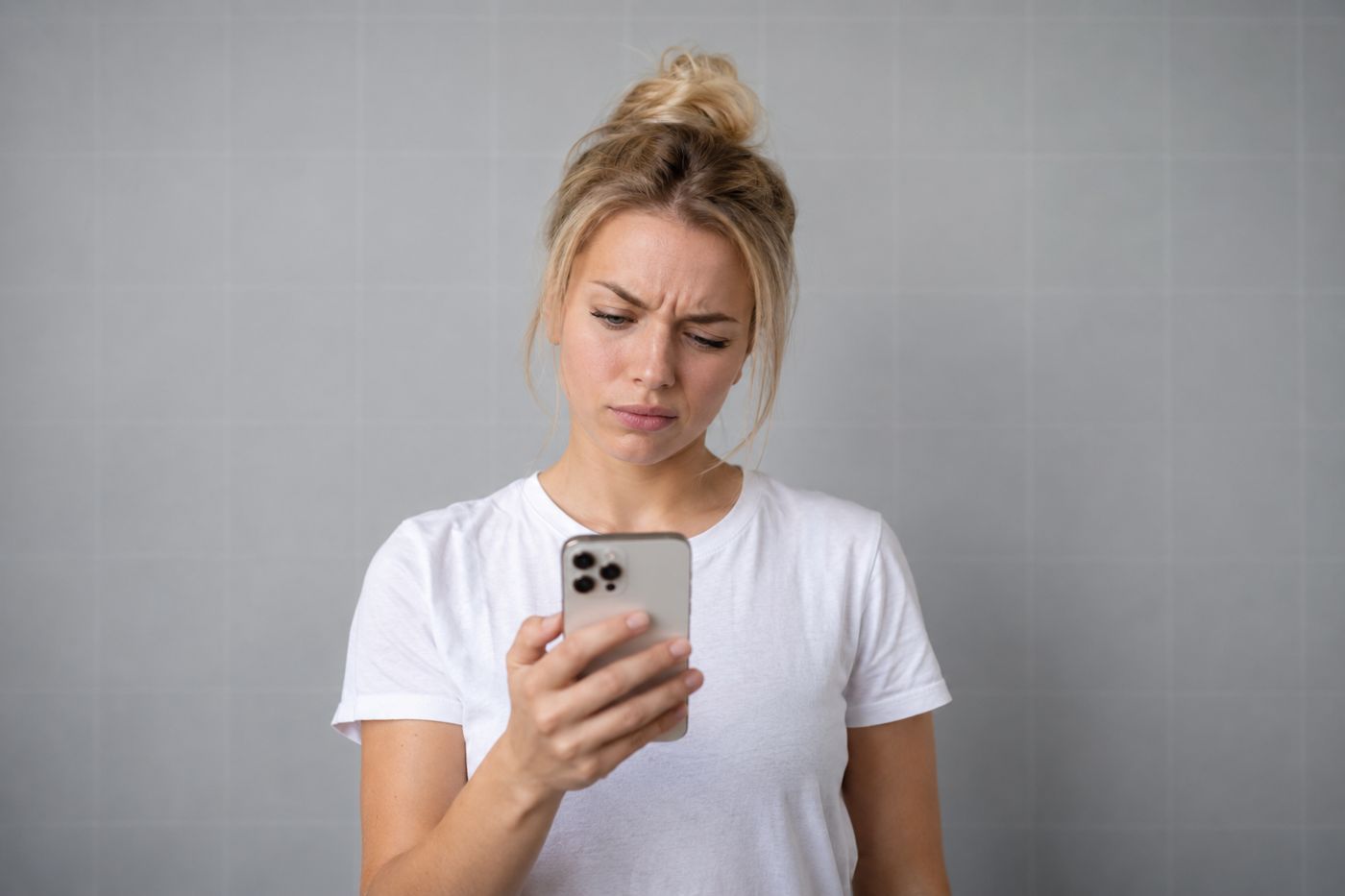
Why we overthink messages (and how to stop)

In short: we overthink messages because text carries no tone, no face and no context. The brain fills those gaps, and when we're anxious, it fills them with the worst-case scenario. To stop: separate what is written from what you imagine, look for neutral explanations, and wait until you're calm before replying.
You get "Can we talk tonight?" and within three seconds your brain has already written the rest: they want to break up, you made a mistake, something is wrong. A few hours later, the conversation turns out to be about… weekend plans. If that sounds familiar, you're not alone: overthinking messages is one of the most common sources of everyday anxiety.
A text message is a conversation without a face
When we talk out loud, much of the meaning comes from something other than words: tone of voice, a smile, eye contact, rhythm. In writing, all of that disappears. What's left is a handful of words, often typed quickly, in between two other things.
Faced with missing information, the brain doesn't stay neutral: it fills in the blanks. And it uses whatever it has at hand, meaning your mood at that moment, your past experiences and your fears. An "ok" read on a good day feels ordinary. The same "ok" read on an evening full of doubt feels cold, even hostile.
The mental traps that derail your reading
Cognitive behavioral therapies describe several "cognitive distortions", automatic thinking shortcuts that bend reality. Three of them come up again and again when reading a message:
- Mind reading: "They only sent an emoji, they must be annoyed." You attribute an intention to the other person without evidence.
- Catastrophizing: "She hasn't replied in 2 hours, it's over." A small fact becomes the opening scene of a disaster.
- Personalization: "If he's curt, it's because of me." You put yourself at the center of a situation that may have a completely different cause (fatigue, work, a phone at 3%).
On top of that comes the negativity bias: our brain naturally gives more weight to negative signals than to positive ones. An ambiguous message is therefore more likely to be read as a threat than as something harmless.
Why it's worse when you're anxious
Anxiety works like an oversensitive smoke detector: it would rather go off for nothing than miss a real danger. When you're already stressed, tired or feeling insecure in a relationship, the alarm threshold drops. The slightest period, the slightest delay, the slightest change in tone sets it off.
The problem is that the alarm pushes you to act fast: follow up, justify yourself, send "Ok forget it…". And it's often those knee-jerk reactions, far more than the original message, that create the real tension.
5 habits to stop overthinking
- Reread only what is written. Copy the message in your head, word for word, without adding any tone. "Can we talk tonight?" is a question about timing, nothing more.
- Separate facts from interpretations. Fact: he replied with one word. Interpretation: he's mad at me. Only the first one is certain.
- Find three neutral explanations. They're at work. They're driving. They always reply briefly. If you find them easily, your disaster scenario is just one option among many.
- Look at the history, not a single message. A conversation is read as a whole: the exchanges from the previous days often say far more than one isolated message.
- Wait until you're calm to reply. A few slow breaths before typing radically change the message you send. Nothing forces you to answer within the minute. See also: how to reply to a message that stresses you out.
How TextCalm helps you step back
That's exactly why we built TextCalm. You add a screenshot or your WhatsApp chat, and Coral, your AI companion, analyzes what is actually written:
- an observed tension score from 1 to 5, measuring the intensity of the message (not a danger level);
- the likely triggers of your anxiety: silence, ambiguity, trust at stake;
- what your anxiety may add to the message, and the concrete cues observed;
- a suggestion of what to reply, and a breathing exercise if the pressure builds up.
The goal isn't to read the other person's mind, but to help you stop trying to.
This article is for information only and is not a substitute for advice from a health professional. If your anxiety is frequent or overwhelming, talk to your doctor or a psychologist.